Whole-House Vinyl Plank Flooring in Miami: What the Job Involves and Who Installs It
Whole-house vinyl plank flooring gives Miami homeowners one consistent surface across living rooms, bedrooms, kitchens, hallways, and other connected spaces. MGS (Modernize Green Solutions) installs flooring across Miami-Dade, Broward, and Palm Beach counties, and a dedicated rep stays with you through the project. With MGS, you pay nothing down and nothing until 30 days after the job is finished, subject to lender approval.
At a glance
- Review the existing floor: Tile, old flooring, floor height, and surface condition can affect whether preparation or removal belongs in the scope.
- Plan the visual flow: Plank direction, doorways, closets, and room-to-room transitions should be considered before installation begins.
- Compare the full proposal: Look beyond a single price and confirm materials, rooms, preparation, trim, transitions, and disposal where applicable.
- Discuss financing early: With MGS, you pay nothing down and nothing until 30 days after the job is finished, subject to lender approval.
A whole-home flooring project is more than choosing a plank color. The existing floor, room layout, transition points, floor heights, preparation needs, and installation sequence all affect the scope. A good plan gives you a clearer picture of what is included before work begins.
Why Whole-House Vinyl Plank Flooring Fits Miami Homes
Short answer: Vinyl plank can give a home one connected look across several rooms. The product, existing surface, and installation plan should be reviewed together before making a final decision.
A floor can change how the entire home feels. In a Kendall house with connected living areas and bedrooms, or a Coral Gables home where flooring meets different room layouts, homeowners often want a consistent finish instead of several materials breaking up the space.
Whole-house vinyl plank flooring can create that continuity. The same plank can run through open living areas, hallways, bedrooms, and other spaces included in the plan. That does not mean every room must be treated the same way. Bathrooms, closets, exterior doors, and areas where the new floor meets tile or another material need their own review.
Many homeowners ask for waterproof LVP. Product water-resistance and waterproof claims vary by manufacturer and product line, so the selected material should be reviewed against its current installation requirements.
The bigger point is simple: do not choose a floor only from a sample board. Look at the home. Think about where the floor will start, where it will stop, how it will meet existing surfaces, and what preparation may be needed first.
For a whole-home project, homeowners should consider:
- Which rooms will receive the new flooring
- Whether the same plank direction should continue through connected spaces
- How flooring will meet bathrooms, closets, exterior doors, and thresholds
- Whether existing tile or other flooring affects finished floor height
- Which trim and transition details should be addressed in the written proposal
This planning is especially useful in South Florida homes with large tile areas, open living rooms, long hallways, and rooms that connect to patios or exterior entries. The right plan depends on the house or condo, the areas included, and the flooring product selected.
Whole-House Vinyl Plank Flooring in Miami Starts With the Existing Floor
Short answer: Existing tile does not automatically need to come out, but it also should not automatically be covered. The condition, height, flatness, and stability of the current surface help determine the recommended scope.
Miami homes often have tile installed throughout much of the house. That leads to one of the most common questions: "Can I put vinyl plank over tile?"
Sometimes that may be an option. Sometimes tile removal or other preparation may make more sense. The answer depends on the current floor and the requirements for the specific vinyl plank product selected.
Existing tile can affect the finished height near:
- Bedroom and bathroom doors
- Exterior doors and thresholds
- Kitchen appliances and cabinets
- Closets and hallway openings
- Areas where the new floor meets a different material
If tile is loose, damaged, uneven, or creates a height concern, that should be discussed before the installation scope is finalized. MGS can review the flooring areas with you and explain what the written proposal includes for preparation, removal, or other work where applicable.
Why preparation matters before the planks go down
The floor below the vinyl plank matters. Surface condition, floor flatness, moisture considerations, and changes in elevation can affect the installation plan.
This is why a whole-home quote should not be treated as a simple material price. Two homes with the same number of rooms may need different preparation based on the floors already in place. A home with stable tile and manageable height changes may have a different scope than a home with damaged flooring, uneven areas, or several materials meeting at doorways.
A site review helps turn broad questions into specific ones: Which rooms are included? What is already below the proposed flooring? Where could finished height matter? What details should appear in the proposal? That is a more useful starting point than assuming every whole-home project follows the same path.
How MGS Plans a Whole-Home Vinyl Plank Installation
Short answer: MGS starts with the home, not just the square footage. The project should account for rooms included, existing surfaces, flooring direction, work sequence, and the details where floors meet.
A full-home flooring project works better when the layout is decided before installation begins. That means looking at the entire route the flooring will take through the home, not only the largest room.
Define the rooms and project boundaries
Start by identifying which rooms are included. That may mean living areas, hallways, bedrooms, closets, kitchens, or other interior spaces. It also means noting areas that will keep their current flooring.
This helps avoid assumptions. A homeowner may want continuous flooring through the main parts of the home but may need separate conversations about bathrooms, laundry spaces, closets, or areas with finishes that will remain.
The project review should also identify practical boundaries. For example, the flooring may stop at a bathroom threshold, continue through a bedroom closet, or meet a different surface near a kitchen. These are scope decisions, not minor afterthoughts.
Plan the plank direction and visual flow
Plank direction can affect how the flooring looks as you move through a home. In an open layout, many homeowners want the flooring to feel continuous rather than restart at every threshold.
The plan should consider hallways, open living areas, bedroom entrances, and connections between rooms. A Brickell condo may have different doorway, elevator-access, and floor-height considerations than a detached home in Miami-Dade. The right scope depends on the property itself.
Homeowners can also bring samples, photos, or a general style preference to the conversation. The goal is not to make every choice at once. It is to connect the product choice to the layout of the home and the work needed before installation.
Plan the work room by room
New flooring affects how you move through the house during the project. The installation sequence should account for the rooms involved, access through the home, furniture planning, surface preparation, and the order of work.
There is no single sequence that fits every property. What matters is that the homeowner understands the planned scope and can ask questions before work starts. If certain rooms need to remain accessible, or if the project includes multiple connected areas, raise that early in the planning conversation.
Review transitions, trim, and doors
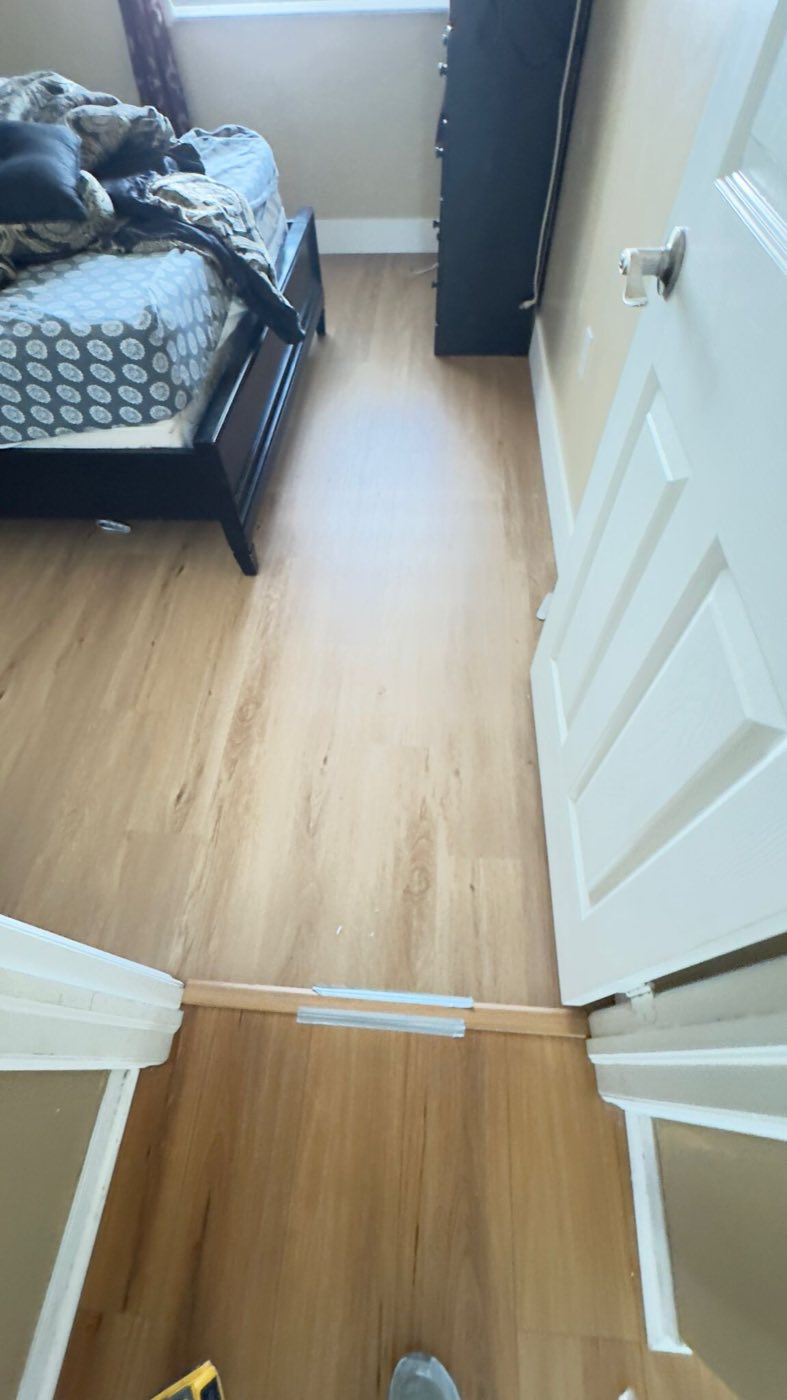
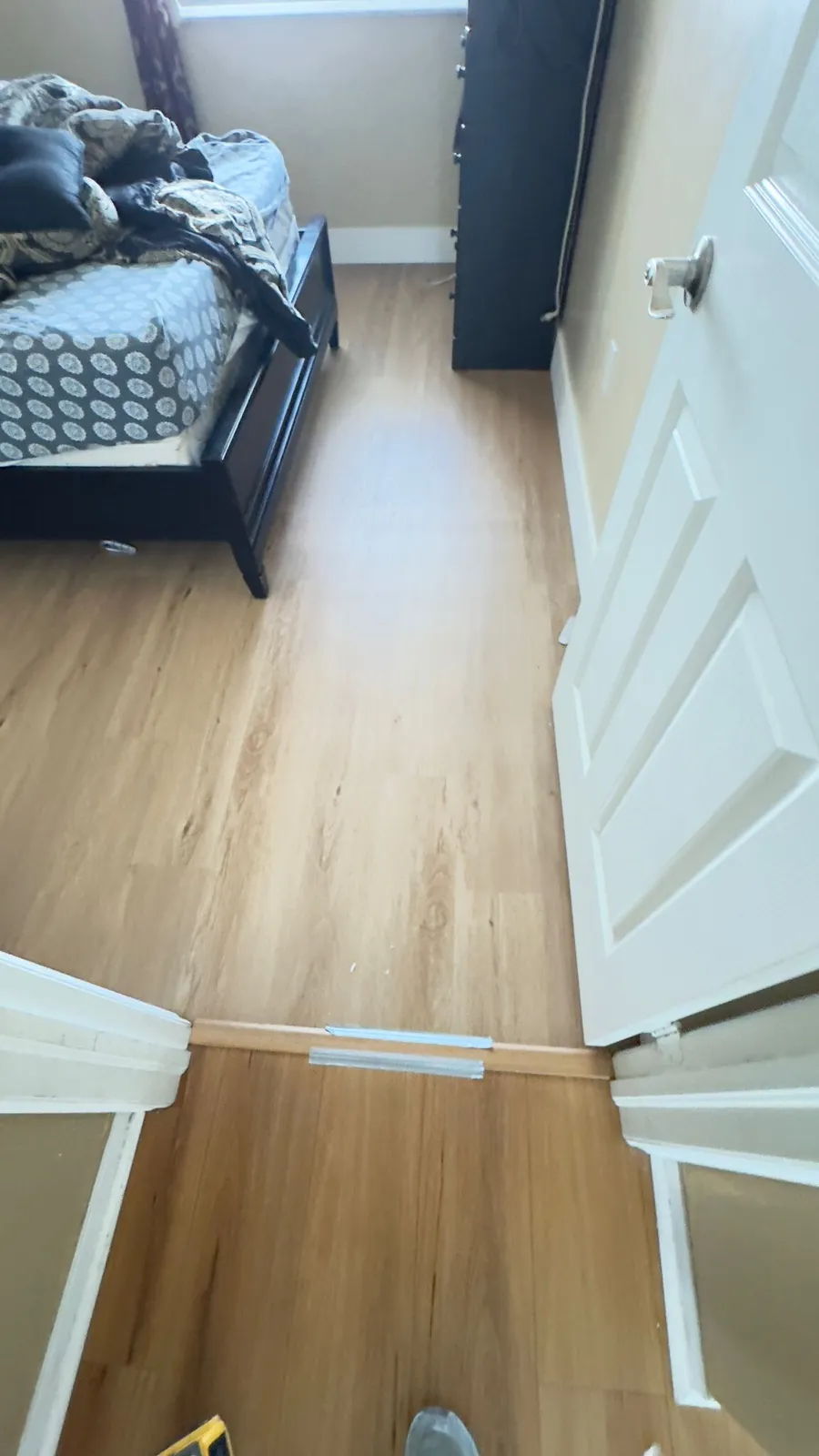
Transitions are where new flooring meets another room, a doorway, tile, or a different floor height. Trim, baseboards, door clearances, and thresholds can also affect the final scope.
These may sound like small details, but they are part of what makes a whole-home project feel planned from room to room. They should be discussed before the flooring is installed, especially where the project meets existing tile, exterior doors, closets, or rooms that are not receiving new flooring.
What Should a Whole-House Flooring Quote Include?
Short answer: A clear quote should identify the rooms, materials, installation work, existing-floor scope, and details such as transitions or trim where applicable. Compare the full scope, not just the final price.
When you compare flooring proposals, ask what is actually included. A lower number may not include the same preparation, removal, transition, or trim work as another quote.
Your conversation with MGS can include:
- Rooms and areas included in the flooring project
- The vinyl plank material selected
- Installation labor
- Review of existing tile or flooring
- Removal, disposal, or preparation where applicable
- Transition and trim details where applicable
- Doorway and finished-floor-height questions
- A written proposal outlining the recommended scope of work and pricing
MGS's typical flooring project range is $10,000 to $20,000. The actual project depends on the home, the flooring selected, the rooms included, and the work needed to prepare the existing surface.
It is helpful to ask questions before choosing based on price alone. Does the proposal identify the rooms? Does it mention existing-floor preparation? Does it explain where transitions may be used? Does it account for details that could affect the project scope? Clear answers help you compare like with like.
If flooring is one part of a larger interior plan, it can also be discussed as part of complete remodeling. Homeowners updating a kitchen or bathroom may want to think through flooring early, especially when they want a more connected look from room to room. You can also review kitchen and bathroom remodeling planning as you decide how to phase your project.
Financing Whole-House Flooring With MGS
Short answer: With MGS, you pay nothing down and nothing until 30 days after the job is finished. Financing is arranged through a lender-partner account, and approval is not guaranteed.
For many homeowners, the question is not whether they want new flooring. It is whether they need to wait until they have the full project amount available in cash.
With MGS, you pay nothing down and nothing until 30 days after the job is finished. Financing is arranged through a lender-partner account, and approval is not guaranteed.
MGS reports typical monthly payments of roughly $100 to $600 across projects ranging from $10,000 to $60,000. Individual payment amounts, approval, and financing terms depend on the lender-partner's review and the details of the project.
That gives homeowners a way to start the conversation now. You can review the flooring areas, understand the scope, and discuss financing timing without assuming that every project must be paid in full before planning begins.
This is also a reason to define the project before applying for financing. A clearer scope gives you a better way to discuss the work you want completed, whether the project is flooring alone or flooring connected to other interior updates.
If you are considering several interior improvements together, read about Miami complete remodeling financing.
Why Homeowners Choose MGS for Miami-Dade Flooring Projects
Short answer: MGS serves Miami-Dade, Broward, and Palm Beach counties with flooring and complete remodeling services. A dedicated rep stays with the homeowner through the project.
MGS has operated in South Florida for about four years. Along with flooring, MGS provides kitchen remodeling, bathroom remodeling, impact windows and doors, and complete remodeling services.
That can be useful when the flooring project connects to a larger home update. Maybe you are reworking a kitchen and want the new floor to carry into the living room. Maybe you are updating a bathroom and need to understand where the flooring changes. Maybe you want one conversation around several connected interior spaces.
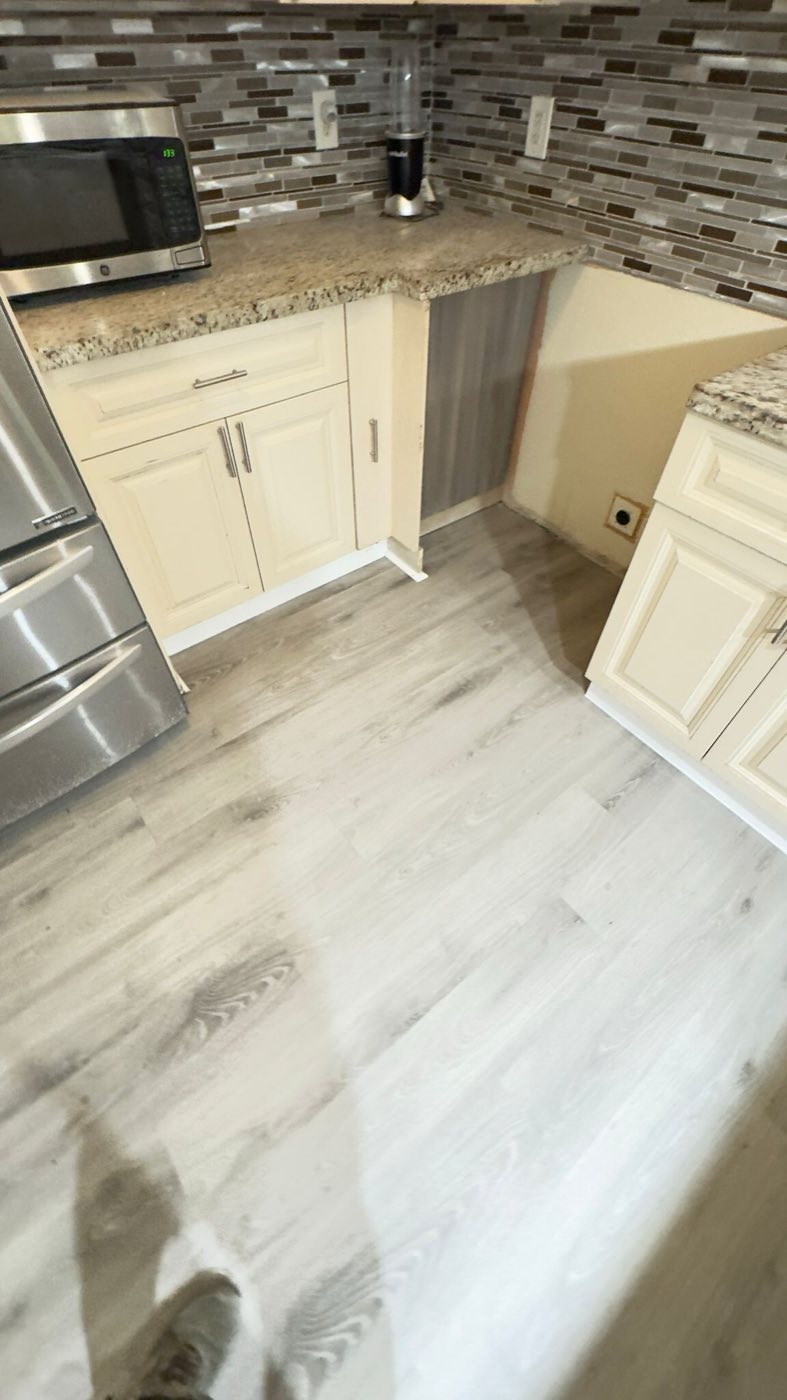
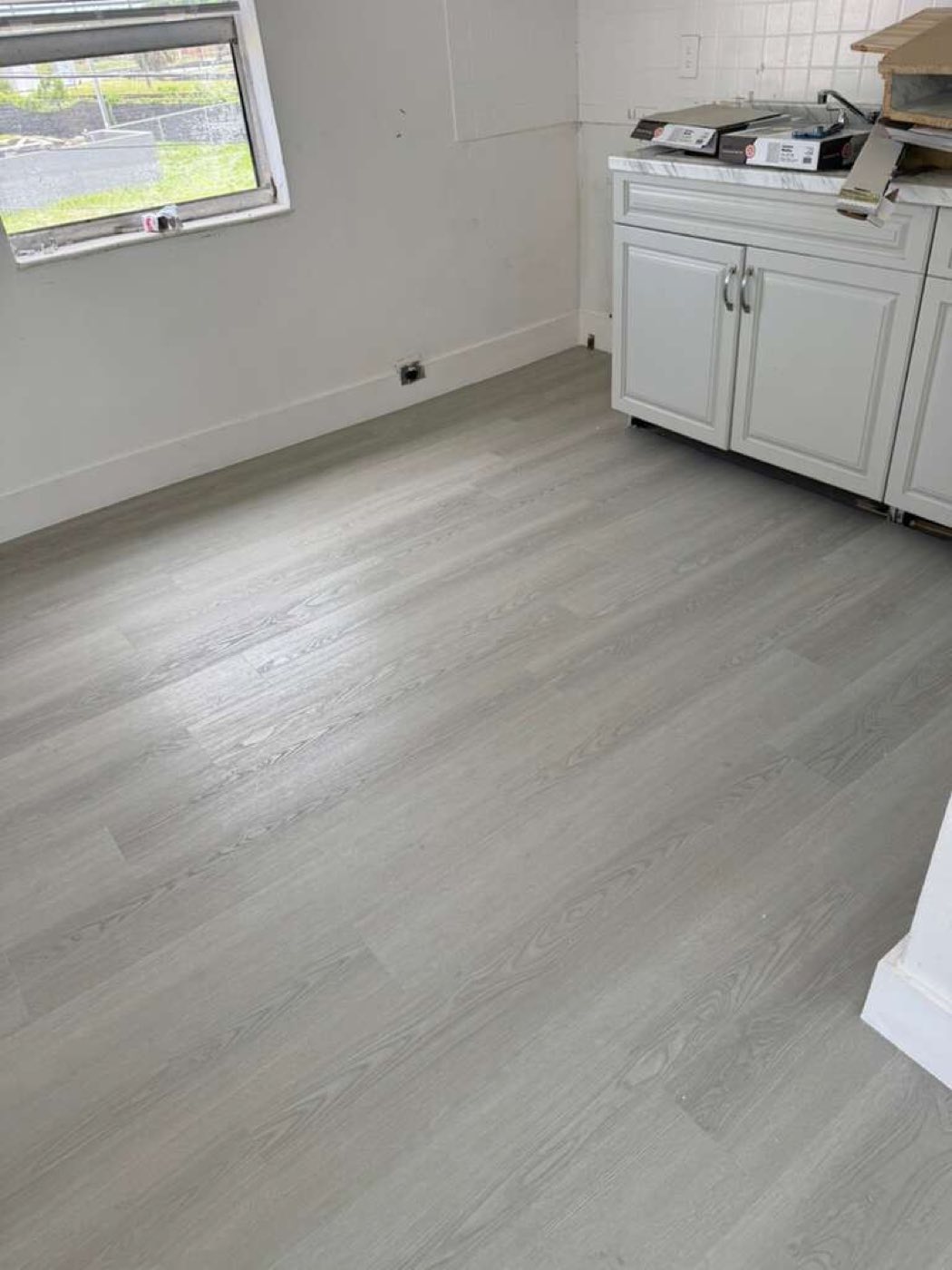
MGS completed vinyl plank work in West Palm Beach in July 2026 and a whole-home flooring project in Homestead in November 2025. Every home has its own layout, material selection, and preparation needs, but these projects reflect the type of flooring work MGS handles in South Florida.
Your dedicated MGS rep stays with you through the project. You have one point of contact while discussing the rooms, material choices, existing flooring, scope questions, and financing timing.
For more planning ideas, visit our vinyl plank flooring guide.
Questions Miami Homeowners Ask About Whole-Home Vinyl Plank
Short answer: Most homeowners want to know whether tile must be removed, what the quote includes, how transitions work, and whether financing is available. The right answer depends on the home and the flooring product selected.
Who installs vinyl plank flooring throughout a house in Miami?
MGS installs flooring in homes throughout Miami-Dade, Broward, and Palm Beach counties. The project can include reviewing the existing floor, planning the rooms involved, discussing layout and transition details, and defining the installation scope.
Can vinyl plank flooring go over tile?
It may be possible in some homes. The existing tile's condition, flatness, height, and stability, along with the selected product's installation requirements, should be reviewed first.
Do I need to remove old tile before installing vinyl plank?
Not always. Tile removal may be part of the project when existing conditions, stability, or floor height create concerns. Each home should be evaluated individually.
What should a whole-house vinyl plank flooring estimate include?
Ask about rooms included, material selection, installation labor, existing-floor preparation or removal, transitions, trim, disposal where applicable, and any details that could change the scope.
How much does whole-house vinyl plank flooring cost with MGS?
MGS's typical flooring project range is $10,000 to $20,000. The final scope depends on the home's layout, rooms included, material selected, existing flooring, and preparation needs.
Can I finance whole-house vinyl plank flooring with no money down?
With MGS, you pay nothing down and nothing until 30 days after the job is finished. Financing is arranged through a lender-partner account, and approval is not guaranteed.
Ready to talk through whole-house vinyl plank flooring for your Miami-area home? Contact MGS to review your rooms, current flooring, project goals, and financing options.